
Language often shapes the debate. And for years now, opponents of Medical Aid in Dying have tirelessly referred to MAID as nothing more than a type of suicide--Physician Assisted Suicide. The implication is almost that malevolently intended doctors are pushing unwilling or unknowing patients to take their lives and that if only the professionals manning the suicide hotline at 988 could talk to these individuals, a life could be saved.
All this flies in the face of the reality, that suicide and MAID are vastly different. A suicide is often reacting impulsively to a great disappointment resulting in a depressed state of mind: a financial loss, a divorce, an eviction, an arrest. These are people who are suffering greatly, to be sure, but who have before them an indeterminate life span. These are people for whom counseling, medication, and a moment of deep reflection on the consequences of their actions may well change the course.
And should they succeed in their sudden intentions, it is predictable that they will die alone, without friends, family, health providers about them, often in a bloody or violent way creating trauma for the suicide's loved ones.
Compare that with death by MAID, where the individual takes medicine under the supervision of at least two physicians, where often the entire family surrounds the patient with love and empathy; where the person chooses the time and place of their death, often preceded by a wake the night before.
It should be noted that in the 13 US jurisdictions which have enacted MAID laws, it is specified that the cause of death is the underlying disease, much as is the case when someone asks for the "plug to be pulled" on life-sustaining machines.
This past week, DRNC attended the 49th annual conference of the American Association of Suicidology, an institution gathering clinicians, researchers and scientists to discuss suicide ideation, implementation and prevention. At this conference, under the direction of the new CEO Dr Jenna Baker,
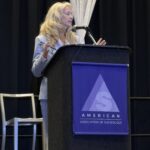
the AAS decided to reinstate an original position paper from 2017 which had clearly articulated why MAID is not suicide
Unfortunately, and for reasons which remain yet unexplained, that statement was withdrawn for further study in 2023. This apparent withdrawal gave MAID opponents an opportunity to make hay and claim that the AAS now considered MAID a type of suicide.
At the 2026 conference, a meeting of the Board of Directors went back to the original 2017 statement with its logical analysis and reinstated the conclusion that MAID is vastly different from suicide. While there was indeed some fireworks in the ensuing debate, the overarching agreement was that suicide prevention is pointless when someone has a terminal illness, has consulted with physicians who have confirmed the projected life span of less than 6 months due to an incurable illness, the person is of sound mind and not acting under coercion and the person is physically able to self administer the 5-drug medicine specifically formulate to provide a quick and painless death.
It will take little victories like these to keep the pace of MAID advancing in the US. The battle of language is an important step, and AAS' statement must be considered a major victory.